

A Beginner’s Guide to Growing, Caring for & Harvesting Blackcurrants
Did you know that over 90% of blackcurrants grown in the UK go towards making Ribena? These nutrient-rich berries are something of an unsung hero — slightly tart, full of vitamin C, and excellent for cordials, jams, and baking. While they’re a little unusual compared to popular berries like strawberries or raspberries, they’re easy to grow and wonderfully productive in the right conditions.
Here’s everything you need to know to grow your own blackcurrants at home or on your allotment.
Choosing the Right Variety
There are two main types of blackcurrant bushes: traditional cultivars that grow on a single stem and modern bush types that are more compact and easier to manage. Look for varieties like:
- ‘Ben Connan’ – early ripening and compact
- ‘Ben Hope’ – resistant to gall mite and mildew
- ‘Big Ben’ – known for large, sweet berries
If space is limited, some varieties are suitable for pots or trained as cordons.
Planting Blackcurrants
When to Plant: Late autumn to early spring, when plants are dormant.
Where to Plant: Choose a sunny or lightly shaded spot with fertile, moisture-retentive but well-draining soil.
Planting Steps:
- Soak bare-root plants in water for 30 minutes before planting.
- Dig a hole twice the width of the root ball and 5–10cm deeper than the plant was previously growing (blackcurrants fruit on new shoots from below soil level).
- Backfill with compost-enriched soil.
- Water thoroughly and mulch around the base.
Spacing: Leave 1.5–2m between bushes.
Ongoing Care
Watering:
- Keep well-watered during dry periods, especially while fruit is forming.
Feeding:
- In early spring, apply a general-purpose fertiliser such as blood, fish & bone.
- Top-dress with compost or well-rotted manure annually.
Pruning:
- After the first year, prune to encourage a framework of strong shoots.
- Each winter, remove one-third of the oldest wood at ground level to encourage new growth.
- Aim to keep a mix of 1-, 2-, and 3-year-old wood.
How & When to Harvest
Season: In the UK, blackcurrants typically ripen from mid-July to early August.
Harvesting Tips:
- Wait until the whole strig (string of berries) has ripened — berries ripen in clusters.
- Cut the entire strig to avoid bruising the fruit.
- Use immediately, refrigerate, or freeze for later use.
Yield: A mature bush can produce 3–5kg of fruit per season!
Storage & Preservation
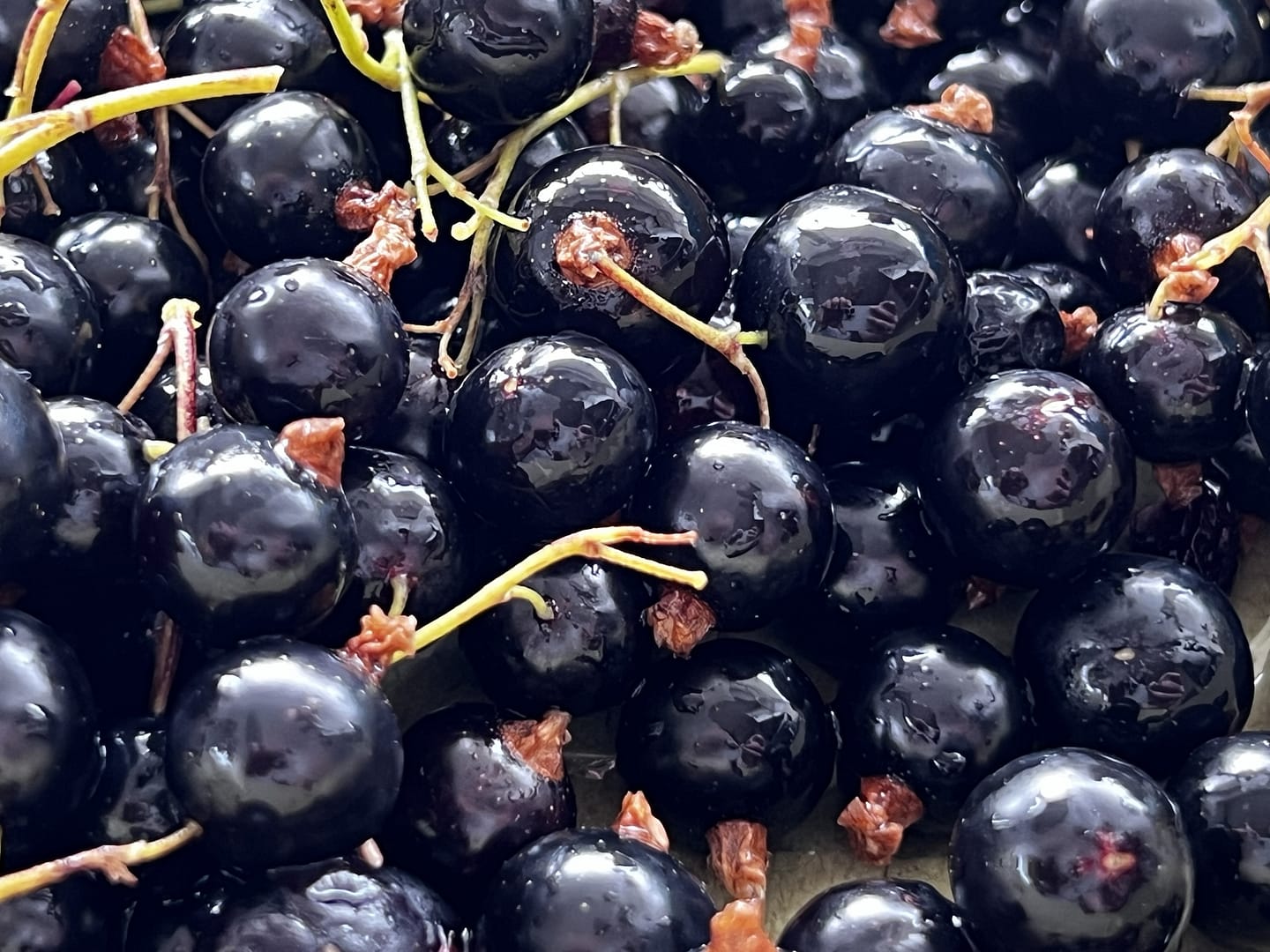
- Refrigerate unwashed berries for up to 5 days.
- Freeze in a single layer on trays, then store in bags or tubs.
- Make into cordial, jam, jelly, or chutney.
Blackcurrants are hardy, reliable, and incredibly productive — perfect for growers who enjoy preserving and cooking with homegrown fruit. With the right variety and a bit of care, your bushes will yield flavour-packed berries year after year.


One Comment
Comments are closed.